
Korean Radish
Raphanus sativus var. longipinnatusClinical Encyclopedia
Korean Radish provides 18 kcal, 0.6g of protein, 4.1g of carbohydrates, and 1.8g of fiber per 100g. With a Nutri-Score grade 'A', it is a highly recommended option for nutrient density.
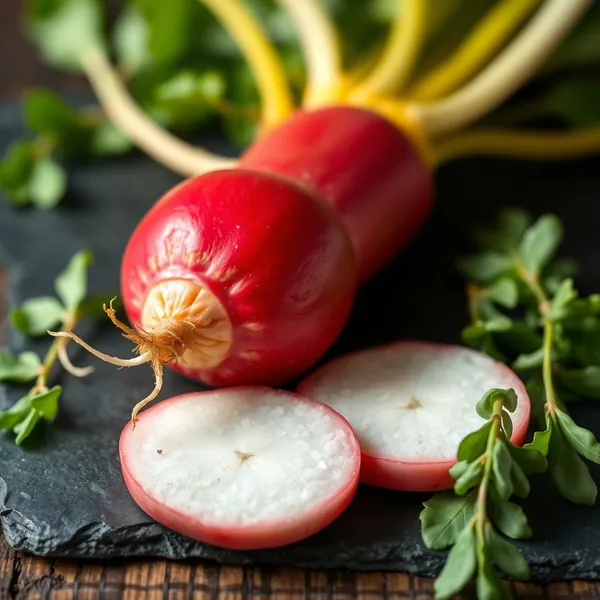
Korean radish, also known as Mu, is a versatile vegetable known for its crisp texture and mild flavor. It is commonly used in Korean cuisine, particularly in pickles and salads.



Macronutrient Ratio
Caloric distribution of primary energy metrics per 100g
Micronutrient DV% Score
Top vitamins and minerals ranked by percentage of Daily Recommended Value
Complete Micronutrient Breakdown
Detailed concentration of essential micronutrients per 100g serving.
Vitamins
Minerals
Health Benefits
Possible Risks & Side Effects
How to Prepare & Consume
Korean radish can be eaten raw in salads or pickled. Cooking methods include steaming or stir-frying, which can enhance its flavor.
Smart Selection & Storage
Choose firm, heavy radishes with smooth skin and no blemishes for the best quality.
Keep in a cool, dry place or refrigerate in a plastic bag to extend shelf life.
Myths vs Realities
Healthy Recipes
Korean Radish and Quinoa Salad
A refreshing salad combining the crunch of Korean radish with protein-packed quinoa and a zesty dressing.
- 1 cup cooked quinoa
- 1 medium Korean radish, julienned
- 1/2 cup cherry tomatoes, halved
- 1/4 cup chopped cilantro
- 2 tablespoons olive oil
- 1 tablespoon lemon juice
- Salt and pepper to taste
- 1. In a large bowl, combine the cooked quinoa, julienned Korean radish, cherry tomatoes, and cilantro.
- 2. In a small bowl, whisk together olive oil, lemon juice, salt, and pepper.
- 3. Pour the dressing over the salad, toss well, and serve chilled.
Spicy Korean Radish Kimchi
A traditional Korean side dish that offers a spicy and tangy flavor, packed with probiotics and nutrients.
- 1 medium Korean radish, cut into matchsticks
- 1 tablespoon sea salt
- 1 tablespoon Korean red pepper flakes
- 1 teaspoon sugar
- 2 cloves garlic, minced
- 1 tablespoon fish sauce
- 1 green onion, chopped
- 1. In a bowl, toss the matchstick radish with sea salt and let it sit for 30 minutes.
- 2. Rinse the radish under cold water and drain well.
- 3. In a separate bowl, mix the red pepper flakes, sugar, garlic, fish sauce, and green onion, then combine with the radish. Pack into a jar and refrigerate for at least 24 hours before serving.
Korean Radish Stir-Fry with Tofu
A quick and nutritious stir-fry featuring Korean radish and tofu, perfect for a healthy weeknight dinner.
- 1 block firm tofu, cubed
- 1 medium Korean radish, sliced
- 2 cups mixed vegetables (bell peppers, broccoli)
- 2 tablespoons soy sauce
- 1 tablespoon sesame oil
- 1 teaspoon ginger, minced
- 1 tablespoon sesame seeds
- 1. Heat sesame oil in a pan over medium heat, add cubed tofu, and cook until golden brown.
- 2. Add sliced Korean radish and mixed vegetables, stirring for about 5 minutes.
- 3. Stir in soy sauce and ginger, cook for another 2 minutes, and sprinkle with sesame seeds before serving.
Korean Radish Soup (Mu Duenjang Jjigae)
A hearty and comforting soup made with Korean radish and fermented soybean paste, rich in flavor and nutrition.
- 1 medium Korean radish, diced
- 1 onion, sliced
- 2 tablespoons doenjang (Korean soybean paste)
- 4 cups vegetable broth
- 1 zucchini, diced
- 1 cup mushrooms, sliced
- 2 green onions, chopped
- 1. In a pot, sauté the onion until translucent, then add diced Korean radish and cook for 5 minutes.
- 2. Stir in doenjang and vegetable broth, bringing to a boil.
- 3. Add zucchini and mushrooms, simmer for 15 minutes, and finish with chopped green onions.
Korean Radish and Cucumber Pickles
A crunchy and tangy pickle recipe that’s perfect as a side dish or topping for rice bowls.
- 1 medium Korean radish, thinly sliced
- 1 cucumber, thinly sliced
- 1/4 cup rice vinegar
- 2 tablespoons sugar
- 1 teaspoon salt
- 1 teaspoon sesame seeds
- 1. In a bowl, mix rice vinegar, sugar, and salt until dissolved.
- 2. Add sliced Korean radish and cucumber, tossing to coat.
- 3. Let the mixture sit for at least 30 minutes before serving, garnished with sesame seeds.
Korean Radish and Avocado Toast
A trendy and nutritious toast topped with creamy avocado and crunchy Korean radish for a delightful breakfast.
- 2 slices whole grain bread
- 1 ripe avocado
- 1/2 medium Korean radish, thinly sliced
- 1 tablespoon lemon juice
- Salt and pepper to taste
- Red pepper flakes for garnish
- 1. Toast the whole grain bread until golden brown.
- 2. Mash the avocado with lemon juice, salt, and pepper, then spread it on the toasted bread.
- 3. Top with thinly sliced Korean radish and a sprinkle of red pepper flakes.
Korean Radish and Lentil Curry
A hearty vegan curry that combines the unique flavor of Korean radish with protein-rich lentils and aromatic spices.
- 1 medium Korean radish, diced
- 1 cup lentils, rinsed
- 1 can coconut milk
- 1 onion, chopped
- 2 cloves garlic, minced
- 1 tablespoon curry powder
- 2 cups vegetable broth
- 1. In a pot, sauté onion and garlic until fragrant, then add diced Korean radish and cook for 5 minutes.
- 2. Stir in lentils, coconut milk, curry powder, and vegetable broth, bringing to a boil.
- 3. Reduce heat and simmer for 25-30 minutes until lentils are tender, then serve warm.
Korean Radish and Chickpea Salad
A protein-packed salad featuring Korean radish and chickpeas, dressed in a tangy vinaigrette for a nutritious meal.
- 1 can chickpeas, drained and rinsed
- 1 medium Korean radish, diced
- 1/2 red bell pepper, diced
- 1/4 cup parsley, chopped
- 2 tablespoons olive oil
- 1 tablespoon apple cider vinegar
- Salt and pepper to taste
- 1. In a large bowl, combine chickpeas, diced Korean radish, bell pepper, and parsley.
- 2. In a small bowl, whisk together olive oil, apple cider vinegar, salt, and pepper.
- 3. Pour the dressing over the salad, toss well, and serve chilled.
Korean Radish and Egg Breakfast Bowl
A nourishing breakfast bowl featuring sautéed Korean radish, scrambled eggs, and fresh greens for a balanced start to the day.
- 1 medium Korean radish, grated
- 2 eggs
- 1 cup spinach
- 1 tablespoon olive oil
- Salt and pepper to taste
- 1 green onion, sliced
- 1. In a skillet, heat olive oil and sauté grated Korean radish until tender.
- 2. Add spinach and cook until wilted, then push to the side of the pan.
- 3. Scramble the eggs in the same pan, season with salt and pepper, and serve topped with green onions.
Korean Radish and Apple Slaw
A crunchy slaw that pairs the sweetness of apples with the crispness of Korean radish, perfect for summer picnics.
- 1 medium Korean radish, shredded
- 1 apple, julienned
- 1/4 cup shredded carrots
- 2 tablespoons apple cider vinegar
- 1 tablespoon honey
- Salt and pepper to taste
- 1. In a large bowl, combine shredded Korean radish, apple, and carrots.
- 2. In a small bowl, whisk together apple cider vinegar, honey, salt, and pepper.
- 3. Pour the dressing over the slaw, toss well, and let it sit for 15 minutes before serving.
Frequently Asked Questions (FAQ)
What is Korean radish used for?
Korean radish is commonly used in salads, pickles, and as a side dish in Korean cuisine.
Is Korean radish healthy?
Yes, it is low in calories, high in vitamins, and contains beneficial compounds that support health.
How do you store Korean radish?
Store it in the refrigerator in a plastic bag to maintain freshness for up to two weeks.
Can you eat Korean radish raw?
Yes, it can be eaten raw and is often used in salads and as a crunchy snack.
What are the health benefits of Korean radish?
It is rich in Vitamin C, aids digestion, and may have cancer-preventive properties.
How do you prepare Korean radish for cooking?
Peel and slice it into thin rounds or matchsticks for stir-frying or steaming.
Is Korean radish the same as daikon?
Yes, Korean radish is a variety of daikon, specifically bred for its flavor and texture.
Can Korean radish help with weight loss?
Its low calorie and high fiber content can aid in weight management and promote satiety.